AI Foundations
A complete high school AI+CS curriculum — from understanding how AI works to building web apps with AI as your creative partner. Available in full-year, semester, or unit-based formats.

AI Foundations: Designing and Building with AI is now available!
In the newly added curriculum, students can write JavaScript, build web apps, and use AI as a creative partner. Units 1–3 are live now; Units 4–6 arrive July 10, completing a full year format.
Artificial Intelligence Foundations
Prepare students for the future with a high school course that blends real-world AI applications with computer science fundamentals—no prior experience needed.

New!
AI Foundations Guided Learning
Want to teach AI literacy in 2026? Join live guided sessions starting in November!


A complete arc — from AI literacy to AI creation
Empower students to explore the impact of computing and AI through real-world, engaging, and adaptable coursework.
- No prior experience required; accessible to all students and teachers
- Detailed lesson plans, self-paced PL, and AI Teaching Assistant included
- Every unit integrates ethics, bias, and responsible AI practice
- Aligned to CSTA 2026 standards and the TeachAI AI Literacy Framework
- 100% free

Flexible, future-ready learning
Empower students to explore the impact of computing and AI through real-world, engaging, and adaptable coursework.
- No prior experience required—accessible to all students
- Modular units tailored to your school’s goals.
- Projects exploring data, ethics, privacy, and AI.
- 100% free, with lesson plans, tutorials, and assessments.
Curriculum at a glance
Grades: 9, 10, 11, 12
Level: Beginner
Duration: Semester, School Year
Devices: Chromebook, Computer
Topics: Programming, Data, Cybersecurity, Artificial Intelligence, Internet, JavaScript, Web Development
Tools: AI Chat Lab, Python Lab, Web Lab, Sketch Lab
Professional Learning: Facilitator-led Workshops, Self-paced Modules
Languages supported: English
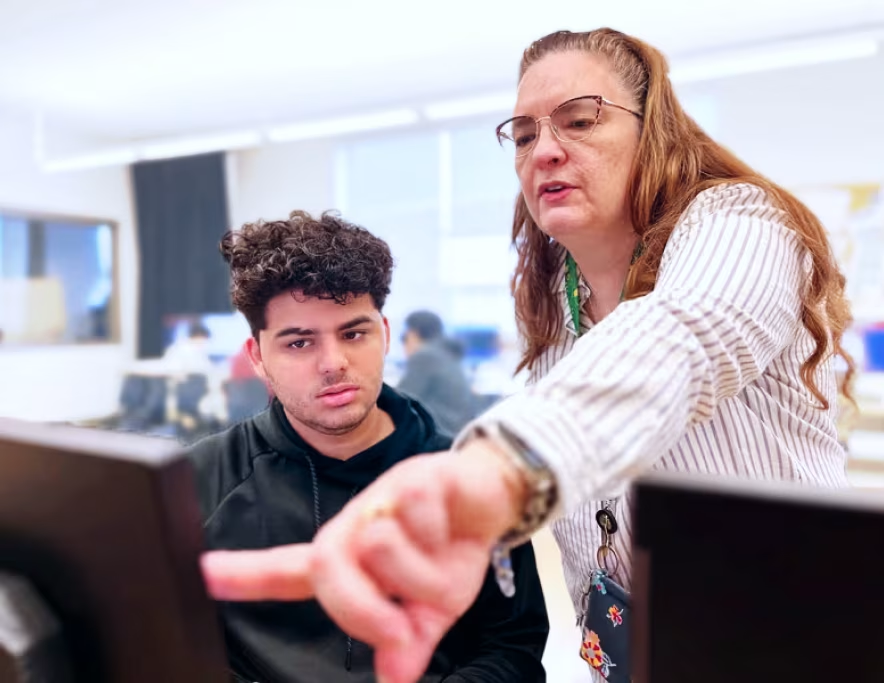
"Just had a one-on-one in my AI Foundations class with a student who struggles with coding and attention span.
A few minutes in something clicked and he started outpacing me—experimenting on his own. His whole demeanor flipped. Confidence unlocked.
Moments like that are why I teach."
Alexander Lonsdale
Teacher, Oklahoma
This curriculum ignited a passion for programming in my students, and now I’m looking at a group of students that have been inspired to be the next generation of coders.
High School Teacher
Find the best AI Foundations format for your class
Explore the year-long course or check out semester-length and shorter units to meet your teaching goals.
Explore year- and semester-long courses, or mix-and-match units to meet your teaching goals.
CHOOSE YOUR FORMAT
Full-year
Grades 9–12
Semester 1
AI Foundations: Exploring AI and CS
Semester 2
AI Foundations: Designing and Building with AI
The complete AI Foundations experience. In the first semester, students develop AI literacy, explore how computers and the internet work, examine cybersecurity, and analyze data. In the second semester, they learn JavaScript and build interactive web apps using AI as a creative partner. Together, the two semesters prepare students to design and shape AI-powered technologies with clarity, confidence, and care.
- 90 class periods per semester (180 total)
- No prior experience required
- Builds toward AP CSP, AP CSA, or workforce readiness
Semester
Teach one semester of the AI Foundations curriculum. We also offer state-aligned options for select states.
Explore flexible learning units
Discover adaptable units that combine foundational computer science concepts with hands-on AI projects. Designed to meet CSTA standards and inspire real-world problem-solving.
Resources that support you every step of the way
Sign up for a Code.org account to get access to materials that will help you teach computer science with confidence. Code.org has extensive resources designed to support educators, even those without prior CS teaching experience.

Lesson Plans
Get step-by-step guidance, learning objectives, and assessment strategies for effective teaching. Helpful resources include slide decks, activity guides, rubrics, and more — all organized in one place. Each lesson plan is accompanied by tips for classroom implementation, differentiation ideas, and extension activities to cater to students of all abilities.
Explore example lesson plan
Instructional videos
Watch easy-to-understand overviews of computer science and programming concepts. Code.org video series are designed specifically to support your classroom and are engaging and fun to watch.
Explore all videos
Slide decks
We offer educators an organized, visually engaging, and pedagogically sound framework to deliver computer science lessons. Code.org slide decks provide step-by-step instructions, examples, and interactive activities that align with curricular objectives.
Explore example slide deck
Assessments
Our curricula includes a comprehensive system of formative and summative assessment resources. These include rubrics, checklists, mini-projects, end-of-chapter projects, student-facing rubrics, sample projects, and post-project tests — all designed to support teachers in measuring student growth, providing feedback, and evaluating student understanding.
Explore an assessment lesson
Track your students' progress
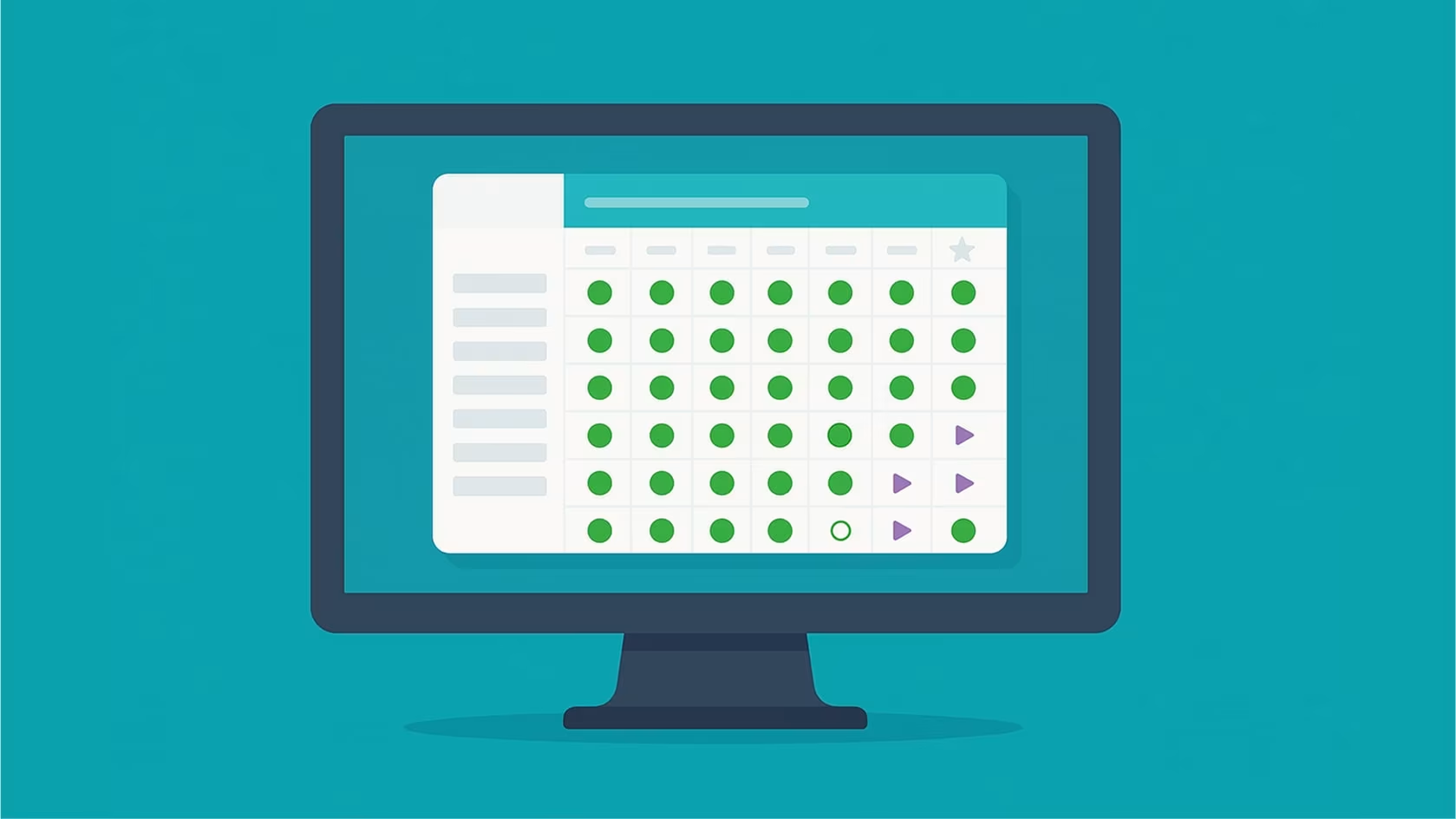
Our powerful progress view helps you monitor student work by providing insights into completion status, time spent, and more. Easily track each student's learning journey, quickly assess participation, and give personalized feedback.
Sign up to start tracking progressLesson Plans
Lesson Plans
Get step-by-step guidance, learning objectives, and assessment strategies for effective teaching. Helpful resources include slide decks, activity guides, rubrics, and more — all organized in one place. Each lesson plan is accompanied by tips for classroom implementation, differentiation ideas, and extension activities to cater to students of all abilities.
Explore example lesson plan
Videos
Instructional videos
Watch easy-to-understand overviews of computer science and programming concepts. Code.org video series are designed specifically to support your classroom and are engaging and fun to watch.
Explore all videos
Slides
Slide decks
We offer educators an organized, visually engaging, and pedagogically sound framework to deliver computer science lessons. Code.org slide decks provide step-by-step instructions, examples, and interactive activities that align with curricular objectives.
Explore example slide deck
Assessments
Assessments
Our curricula includes a comprehensive system of formative and summative assessment resources. These include rubrics, checklists, mini-projects, end-of-chapter projects, student-facing rubrics, sample projects, and post-project tests — all designed to support teachers in measuring student growth, providing feedback, and evaluating student understanding.
Explore an assessment lesson
Progress
Track your students' progress
Our powerful progress view helps you monitor student work by providing insights into completion status, time spent, and more. Easily track each student's learning journey, quickly assess participation, and give personalized feedback.
Sign up to start tracking progress
Preparing to teach this curriculum

9-12 Teachers
Teaching AI Foundations
Provides educators with a comprehensive understanding of the curriculum, enabling them to effectively guide students through essential computer science concepts, the transformative role of AI, and hands-on experience with AI tools.
Explore the tools used in AI Foundations
Web Lab

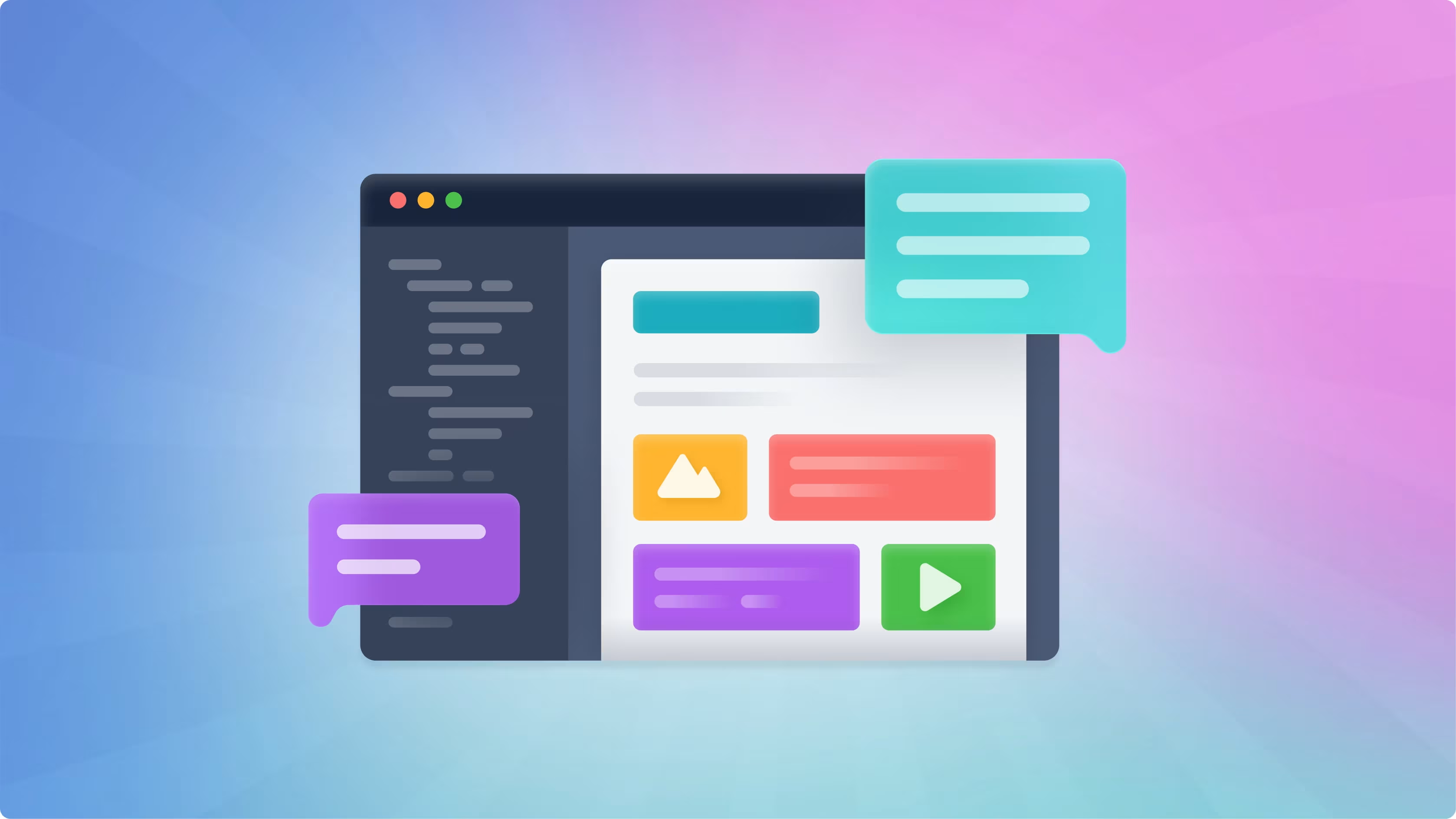
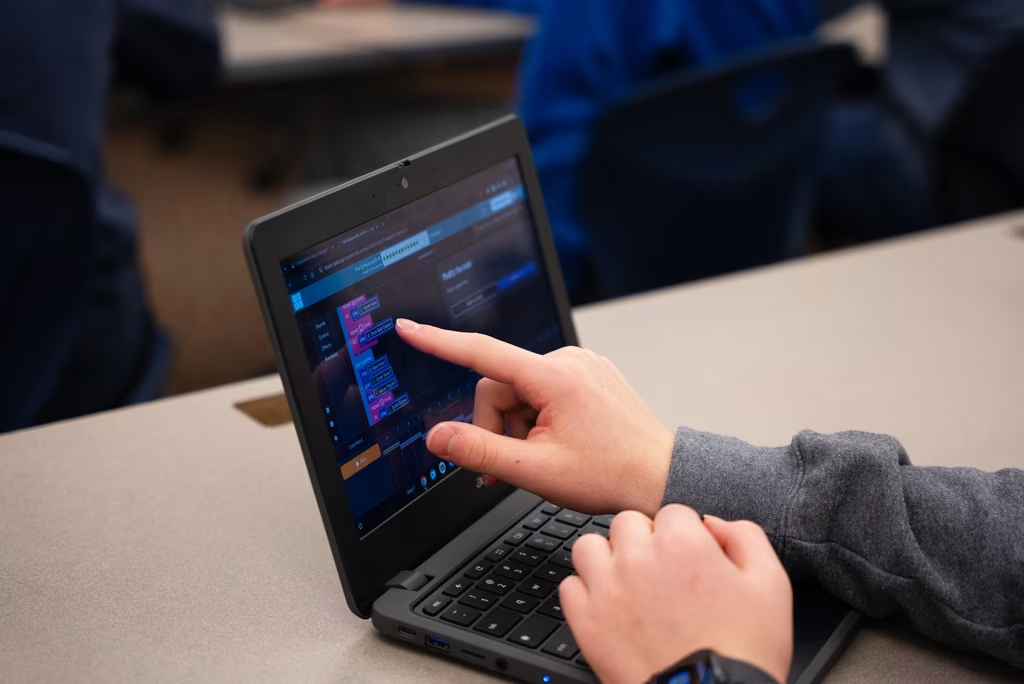
Create web apps using HTML, CSS, and JavaScript with AI support.
Python Lab

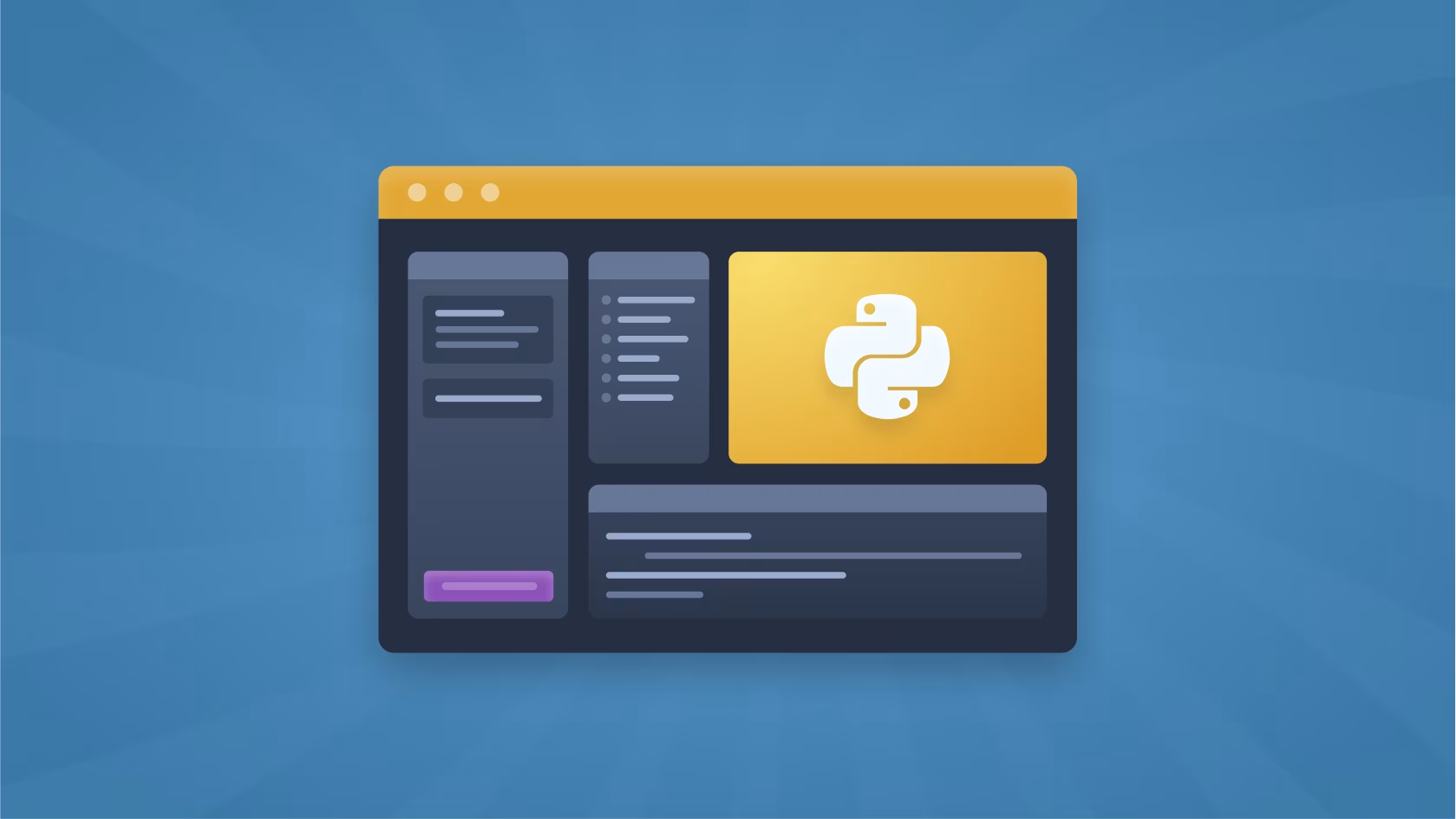
Student-friendly IDE that runs real Python code.
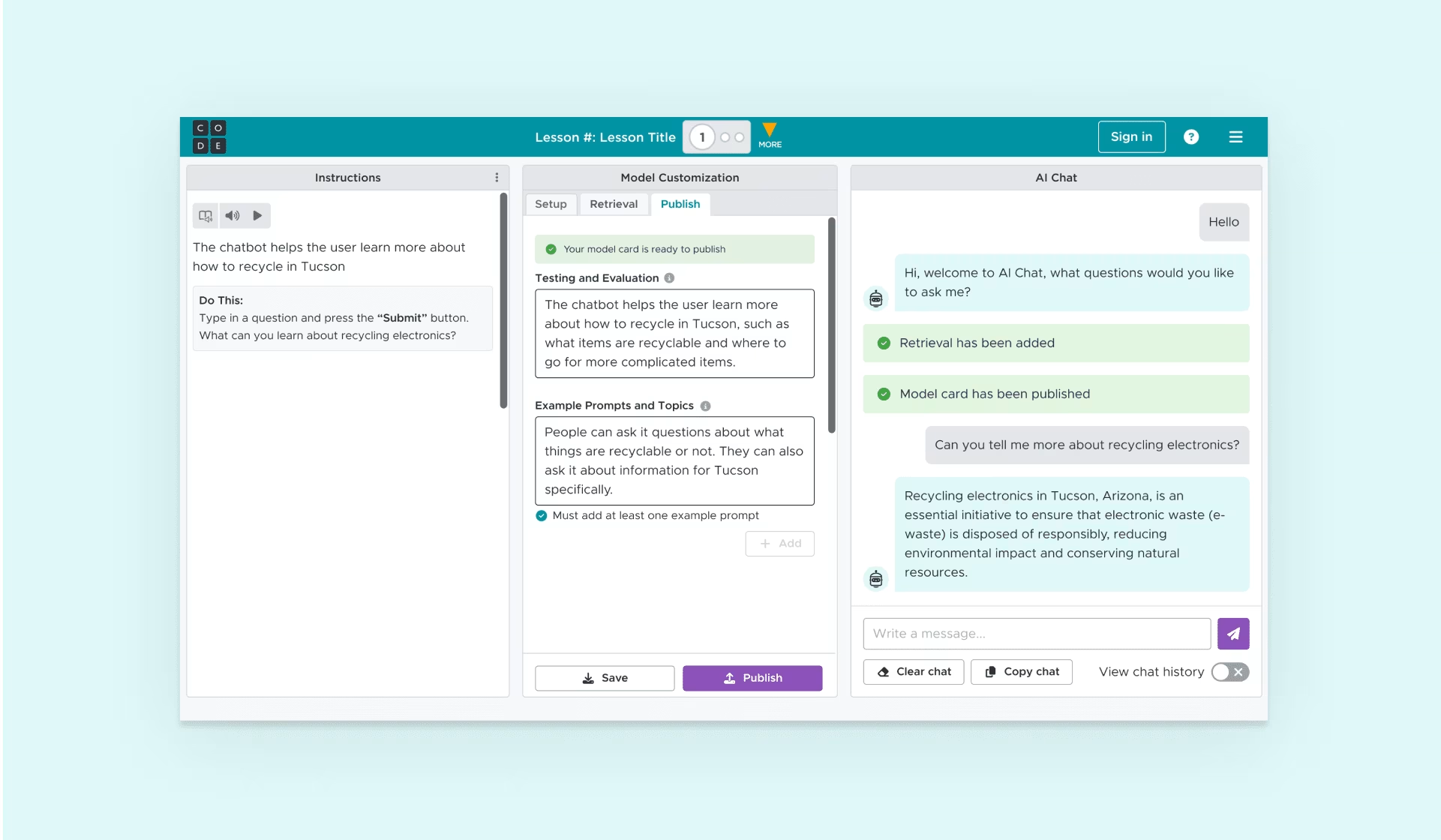
AI Chat Lab

The AI Chat Lab tool, accessible only through our curriculum, allows students to experiment with AI models, learn prompt engineering, and customize chatbots using real-world techniques.
Frequently asked questions
AIF (AI Foundations) is an introductory high school computer science course that integrates AI, data science, cybersecurity, and programming. It can serve as a student's first CS course or as a bridge to more advanced courses like AP CSP or AP CSA.
AI Foundations introduces foundational CS concepts like CS Discoveries but at a high school level and with a strong focus on AI and real-world applications. Unlike AP CSP, it is not tied to an AP exam and provides more in-depth exploration of AI, data science, and cybersecurity.
See in depth comparison to:
AIF is designed to meet the majority of state computer science graduation requirements. Specific alignment varies by state, so schools should verify with their local education authorities.
Yes, AIF aligns with CSTA standards and incorporates key concepts from state and national frameworks. It also integrates AI literacy, data science, and cybersecurity topics relevant to emerging standards.

Still have questions? Reach out to us! We are here to help.
Our support team is here to answer any questions you may have about starting teaching with Code.org. You can also ask other teachers about their experience on our teacher forums.
Stay informed on AI+CS education
Join our community of educators, parents, and advocates by signing up for the latest updates on AI+CS education and Code.org initiatives. Be the first to receive news, resources, and opportunities to support AI+CS learning.
You can unsubscribe at any time.

Additional resources
Paragraph
Curriculum Catalog

Comprehensive curriculum offerings for every grade and experience level featuring robust structured and self-paced learning options.
Artificial Intelligence (AI)

Explore how AI is shaping our world through free curriculum, videos, and integrations that make artificial intelligence accessible and inspiring.
Professional Learning

Flexible, high-quality training that helps build confidence and equips teachers to effectively teach computer science with our curriculum.