Grades 9-12
AI-Powered Threats and Defenses
Explore how cyberattacks happen, how defenses are built, and how AI is reshaping both, from AI-powered phishing to adaptive authentication.
MonthExplore

Move beyond “don’t click that link.” Here’s how the systems that protect and attack information work, and where to start teaching it.


Search “cybersecurity education” and most results focus on strong passwords and suspicious links. That’s the floor, not the ceiling.
At CodeAI, cybersecurity sits inside a bigger goal: digital fluency, the ability to understand, direct, question, and create with the technology shaping students’ world. Cybersecurity is where that ability meets something with real stakes (like a phishing email, a deepfaked video, or a data breach) and where students learn to defend against it, not just avoid it.
That’s also why cybersecurity doesn’t belong to one discipline. It’s where computer science, AI science, and data science meet a single, urgent, real-world problem.
How an encrypted message or a blockchain ledger works.
How an AI system generates a convincing fake — and where its training leaves it predictable.
What data is actually being collected, and what a breach exposes.
Cybersecurity education teaches students to understand how digital threats work, question what they see online, and defend against both.
Cybersecurity is a fast-changing field shaped by evolving threats, intelligent systems, and the professionals who work to defend digital infrastructure.
Cybersecurity is a fast-changing field shaped by evolving threats, intelligent systems, and the professionals who work to defend digital infrastructure.
Cybersecurity is a fast-changing field shaped by evolving threats, intelligent systems, and the professionals who defend digital infrastructure.
Explore how cyberattacks happen, how defenses are built, and how AI is reshaping both, from AI-powered phishing to adaptive authentication.

Understand how the Internet works, including protocols like IP and DNS, and examine its impact on communication and society.

Dive into Blockchain by pairing these lessons with the How Blockchain Works video series! Students engage in an activity and then reflect to understand Blockchain and its users.

Psssst! Got a secret? Learn about the need for encryption and simple techniques for cracking secret messages in this Hour of Code activity.
Dive into Blockchain by pairing these lessons with the How Blockchain Works video series! Students engage in an activity and then reflect to understand Blockchain and its users.
Psssst! Got a secret? Learn about the need for encryption and simple techniques for cracking secret messages in this Hour of Code activity.
Understand how the Internet works, including protocols like IP and DNS, and examine its impact on communication and society.

Explore cybersecurity basics, from encryption and security risks to data privacy and the human factors behind digital breaches.
A month-long unit on how AI has changed the threat landscape: deepfakes, AI-generated phishing, and misinformation that looks like real news — and how to recognize and respond to each.

CodeAI’s ongoing YouTube series, translating practical safety habits into short videos for students and the adults around them. The one resource here that doesn’t require a classroom at all.

A single-lesson starting point, no prior experience required. Students learn how encryption keeps a message private, using the same code-making and code-breaking logic that underlies real systems today.

A month-long unit on how blockchain systems verify and secure information without a central authority — the logic behind cryptocurrency, and behind any system that needs trust without one gatekeeper vouching for it.
A month-long unit on the infrastructure — networks, protocols, the systems cybersecurity protects — that students use every day.
A month-long unit on the stakes of cybersecurity beyond one device or one person: infrastructure, geopolitics, digital rights.

A month-long unit on how AI has changed the threat landscape: deepfakes, AI-generated phishing, and misinformation that looks like real news — and how to recognize and respond to each.

CodeAI’s ongoing YouTube series, translating practical safety habits into short videos for students and the adults around them. The one resource here that doesn’t require a classroom at all.
Start with a single lesson or a month-long unit, watch the video series, and find answers to common questions.
Threats have changed faster than guidance has. “Don’t click suspicious links” assumes a suspicious link looks suspicious. AI-generated phishing emails, cloned voices, and deepfaked video don’t look wrong anymore. They look like a text from a friend or an email from the principal. Students are already encountering this content, often with no framework for evaluating it. Waiting for a curriculum mandate means waiting for the moment they need this most: old enough to be targeted individually, not yet equipped to know what to check. Digital fluency means students learn to question what they see and verify it, instead of being told not to trust anything online. That’s the difference between fear and fluency.
9-12 Teachers
Provides educators with a comprehensive understanding of the curriculum, enabling them to effectively guide students through essential computer science concepts, the transformative role of AI, and hands-on experience with AI tools.
8-12 Teachers
This professional learning module prepares teachers to guide 8-12 students through Code.org's Exploring Generative UI units.
3-5 Teachers
This professional learning module equips educators to teach Code.org's How AI Makes Decisions module, where students (grades 3-5) explore AI concepts through engaging activities, data exploration, and decision making.
6-12 Teachers
This professional learning module prepares teachers to guide students through Code.org's Coding with AI unit, where students leverage Large Language Models to write more powerful code while exploring ethical considerations and responsible AI use.
9-12 Teachers
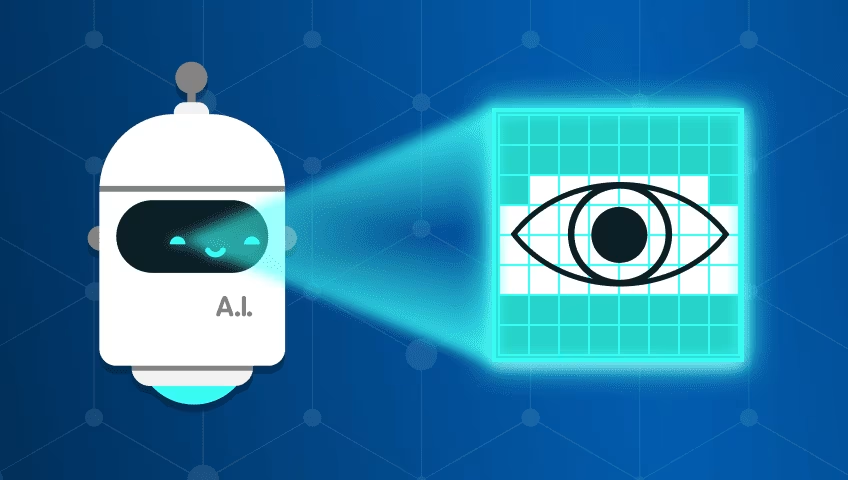
This professional learning module equips educators to teach Code.org's Computer Vision unit, where students (grades 6-12) explore image and video analysis through engaging activities and discussions on ethics and real-world applications.
6-10 Teachers
After completing this professional learning experience, you'll be ready to get started teaching Code.org’s CSD Unit 7 - AI and Machine Learning with your students.
K-12 Teachers
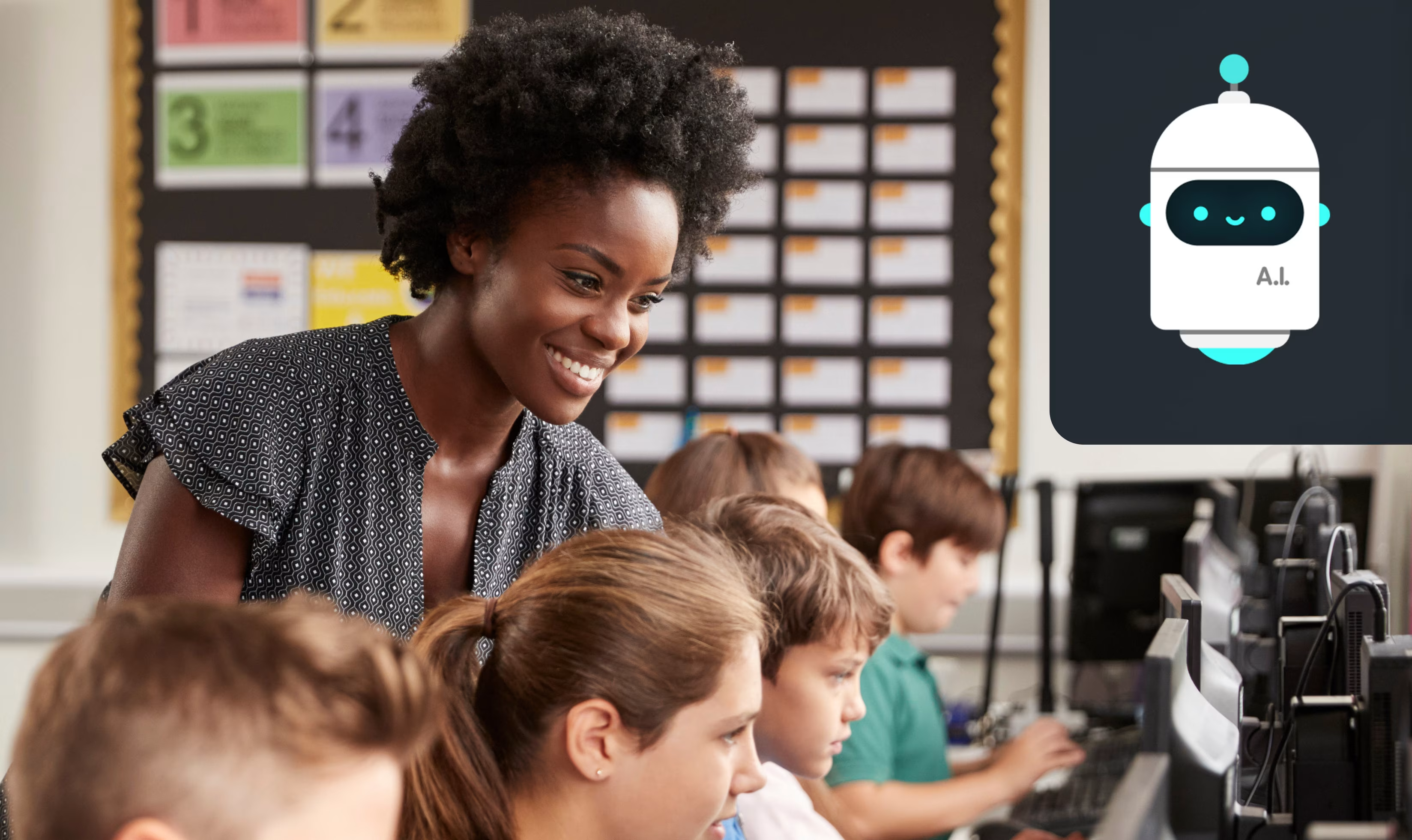
Foundational online learning series for any teacher or educator interested in the groundbreaking world of artificial intelligence (AI) and its transformative potential in education.
CodeAI’s ongoing video series translates practical safety habits into short videos for students and the adults around them. No classroom required. All ages.
You don’t need a computer science background to teach this. All of CodeAI’s cybersecurity units are built to stand alone. A social studies, English, or homeroom teacher can run one without teaching the rest of the course it lives in.
Teaching cybersecurity tends to work in stages, the same way any part of digital fluency does. An unplugged activity builds the vocabulary first; the kind of exercise that makes “encryption” a concrete idea instead of an abstract one, no devices required. A guided lesson follows, walking students through how a real system defends against a real threat. Project-based work comes last, where students design their own defense or break down an attack step by step.
That progression — unplugged, then guided, then project-based — is one CodeAI uses across its curriculum. Cybersecurity just gives it more concrete stakes.


Threats have changed faster than guidance has. “Don’t click suspicious links” assumes a suspicious link looks suspicious. AI-generated phishing emails, cloned voices, and deepfaked video don’t look wrong anymore. They look like a text from a friend or an email from the principal.
Students are already encountering this content, often with no framework for evaluating it. Waiting for a curriculum mandate means waiting for the moment they need this most: old enough to be targeted individually, not yet equipped to know what to check.
Digital fluency means students learn to question what they see and verify it, instead of being told not to trust anything online. That’s the difference between fear and fluency.
Teaching students to understand how digital threats work, question what they see online, and defend against both.
AI has made threats more convincing and more personal: deepfakes, AI-generated phishing, and misinformation that can look like real news. CodeAI’s AI-Powered Threats and Defenses unit addresses this directly.
No. Several of these units are built to run independently of the rest of their course, and CodeAI’s professional learning supports educators without a CS background.
CodeAI’s cybersecurity curriculum currently begins in middle school with Hour of Code: Simple Encryption and continues through high school.
Encryption is one tool cybersecurity relies on. It’s the practice of turning readable information into something unreadable without a key. Cybersecurity is the broader practice of protecting systems, data, and people from threats, which draws on encryption along with many other tools and disciplines.
Blockchain is a way of recording information across many computers at once, so no single one can quietly change the record. The logic behind cryptocurrency, but also behind any system that needs trust without a single gatekeeper. Students can learn it as a case study in how security and trust work without a central authority.
Get new cybersecurity lessons, videos, and updates from CodeAI.
You can unsubscribe at any time.