
The future of 250 million students in India depends on what we do next
Help us build India’s AI foundation

India's AI future starts in the classroom
Artificial intelligence is already reshaping how work gets done — and, in turn, what students need to learn to participate in the economy. As roles evolve and new ones emerge, the difference between opportunity and exclusion is increasingly defined by who understands how AI works and who does not. Yet today, many students — especially in India’s most underserved classrooms — are encountering AI as passive consumers, not as thinkers or builders, engaging with powerful tools without understanding how they work or how to use them responsibly.
250 million
students in India's school system
70%
students don't have access to computer science and AI education
10 million
teachers need training to impart AI education
A historical policy shift in India
India is beginning to move. National policy has clearly signaled that computational thinking and AI literacy are no longer optional skills, but foundational ones. Starting in the 2026-27 academic year, AI will be introduced into school curricula nationwide from Grade 3 onward. But policy ambition alone will not deliver impact. The real constraint lies in execution — specifically, the ability to rapidly prepare and support over 10 million teachers to confidently teach AI-related concepts within just two to three years.

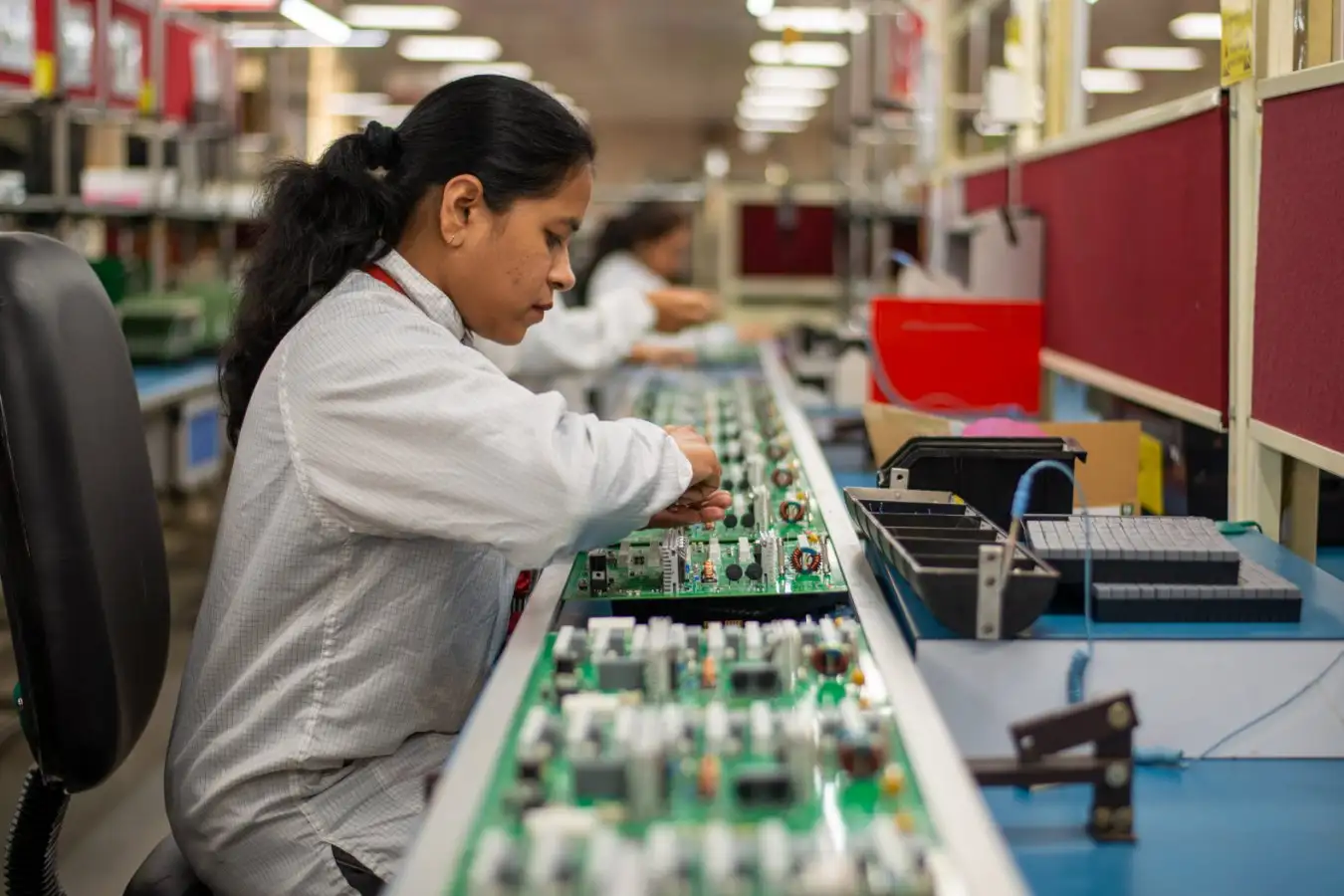
India’s future workforce is at stake
India’s unemployment challenge is closely linked to a systemic skills mismatch between emerging job requirements and the capabilities developed through the K–12 education system. As AI becomes integral to future industries, equipping children with AI skills and conceptual understanding is no longer optional but essential.
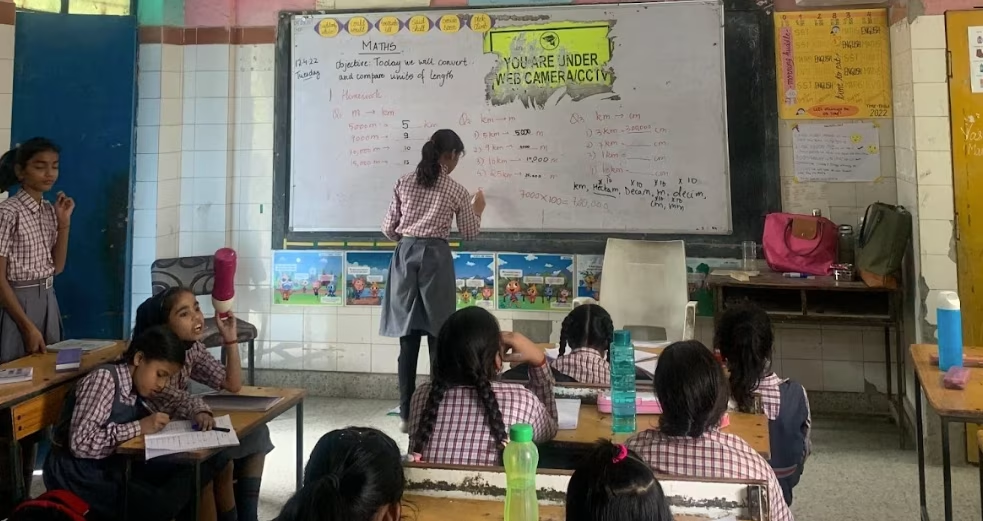
The access gap
Access to AI and Computer Science education remains concentrated among urban, English-speaking students in private schools, while 70% of children in government schools are largely excluded from the skills that define participation in the modern economy.
The race against time
Policy ambition alone will not deliver impact. The real constraint lies in execution — specifically, the ability to rapidly prepare and support over one crore teachers to confidently teach AI-related concepts within just two to three years.
Why CodeAI?
CodeAI (formerly Code.org) was built on the belief that computer science is a foundational literacy — one that empowers students to understand, not just use, technology. As AI reshapes the baseline of what it means to be educated, that same foundation becomes essential for AI fluency.
To prepare students not just for today's tools but for tomorrow's technologies, AI education must be built on a strong foundation of computational thinking and core CS concepts.

Proven track record
Over 100 million students reached worldwide with millions of teachers trained, bringing more than a decade of experience in scaling CS education.
Deep, integrated technical approach
By teaching computer science and AI together, we enable students to see how AI systems are built, how data and algorithms shape outcomes, and how ethical considerations emerge from technical choices.
Responsible AI by design
Strong emphasis on responsible and ethical AI throughout its curriculum, ensuring students can participate fully in an AI-driven future by developing critical thinking, ethical reasoning, and values alongside technical skills.
Code.org has reached 2.2 Million Student Accounts in India!

The technical foundations of AI literacy
AI literacy needs to be built on a solid foundation of computer science, including algorithms, data, etc. Without that, students would miss the opportunity to understand how AI systems are trained, how they make decisions, and how issues like biases or intended consequences can arise in these systems. It is about giving all students the ability to think critically about the technology that’s increasingly sharing their lives. By understanding how AI works behind the technology, they can question how it’s being used, spot when things are not right, and contribute to building better and more ethical technology as creators, not just reacting to it.

The challenge will be to reach out to over one crore teachers across the country and orient them in imparting AI-related education. We need to move fast so that students and teachers are properly aligned with this technology over the next two to three years.
Secretary for the Department of School Education and Literacy, Ministry of Education, Government of India
Our five year roadmap

An India-ready approach
Our expansion in India is already underway. Over the past year, we have moved deliberately from exploration to execution — putting in place the people, partnerships, and relationships required to earn trust and deliver impact at scale.

Mobile-first AI foundations curriculum
Prototyping a mobile-first AI foundations curriculum to support equitable access in low-resource and government school settings.

Building implementation partnerships
Collaborations with respected NGOs like Leadership for Equity, piloting teacher training programs for government school contexts.

Academic engagement
Shared our AI curriculum with Professors Karthik Raman and S. Neethi of IIT Madras, leaders of the CBSE-appointed Expert Committee developing India’s national AI curriculum. Selected lessons are being reviewed to inform curriculum design.
Setting up a dedicated team
Deep experience across education systems, nonprofit leadership, government engagement, and large-scale program delivery anchors our work in India's realities.

Bold bets are required to move pilots to scale, and this is where philanthropy must step forward. These bets demand blended investment, bringing together government, philanthropic, and private capital to mobilize the resources needed for meaningful change.



We are honored to welcome S. Ramadorai as our Chairman of Board and Smt. Sonali Deshpande as our promoter trustee!

S. Ramadorai
CHAIRMAN OF BOARD
Subramaniam Ramadorai is CodeAI's Chairman of Board in India. He is a Padma Bhushan awardee, the former CEO & MD of TCS, and former Chairman of the NSDA. He currently chairs Tata Advanced Systems and Tata Technologies, and serves as an Independent Director on the Boards of Hindustan Unilever, Asian Paints, and Piramal Enterprises.

Sonali Deshpande
PROMOTER TRUSTEE
Sonali Deshpande is the promoter trustee of CodeAI’s India board. She has also been the Chief Trustee and the Chairperson of the Board of Trustees since the Persistent Foundation's inception in 2009.
Our Global Council Member Advisors
We are committed to building a balanced group that reflects diversity across geography professional sectors including corporate leadership, philanthropy, academia, business, software, and nonprofit organizations. This intentional approach will ensure a wide range of perspectives and expertise, strengthening the Council’s ability to provide thoughtful, relevant, and globally informed guidance.


Help build India's AI education foundation

Want to learn more?
To request additional information about this initiative or to make a gift, please contact Anchal Sayal, Senior Global Partnerships Manager at anchal.sayal@code.org.